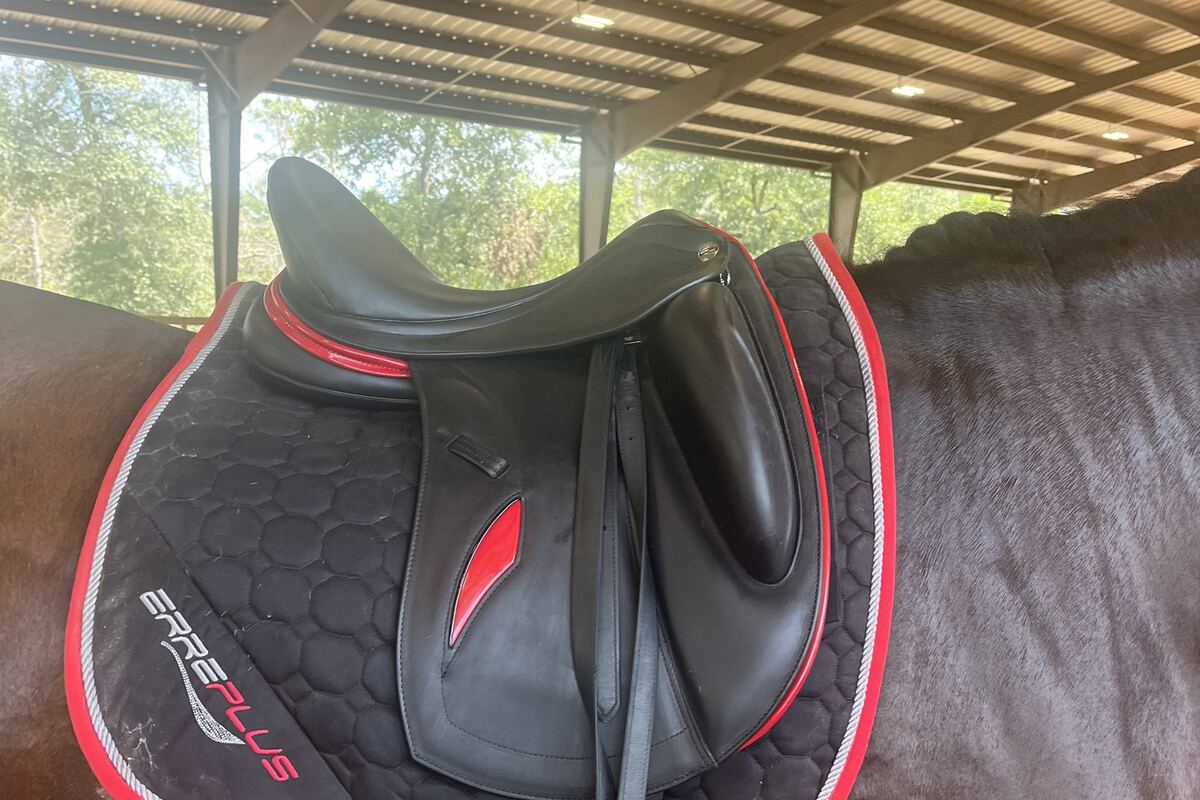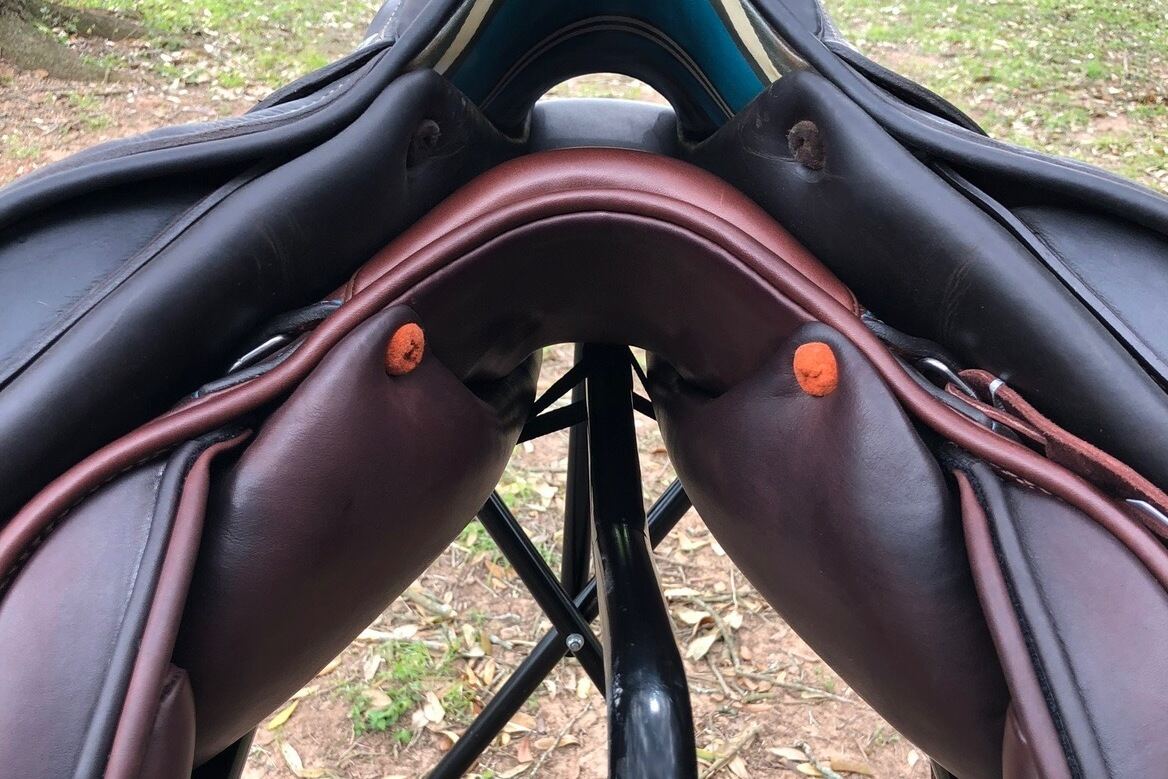
Turn an English saddle upside down and you’ll see two long cushions running either side of the gullet. Those are the panels, and on most traditional saddles they’re stuffed with wool. That wool is the flocking. It’s the only part of the saddle that actually touches your horse’s back, and it’s the part that changes the most over time.
Here’s what flocking does, why it needs looking after, and how to tell when yours is due.
What flocking does
The tree gives a saddle its shape. The flocking is what lets that shape sit evenly on a living, moving back. Wool can be added in one spot and taken out of another, so a fitter can fine-tune how the saddle sits: level from front to back, even from side to side, and in contact along the length of the panel instead of perching on a few points.
That adjustability is the whole point. Your horse’s back is not the same shape in March as it is in October, and it is not the same shape at five years old as it is at fifteen. Flocking lets the same saddle follow those changes.
Why flocking changes over time
Wool compresses. Every ride packs it down a little, and it doesn’t always pack down evenly. A rider who sits slightly to one side, a horse that is stronger on one side, or a saddle that tips forward will all wear the flocking unevenly. A new saddle settles the most in its first months of use, as the fresh wool beds down to the horse.
Meanwhile the horse is changing too. Fitness, weight, age, time off, a new training program and the seasons all reshape the back. So even flocking that has held up well can stop matching the horse under it.
Signs your flocking needs attention
Some things you can check yourself, with the saddle off and then on:
- Lumps or hard spots when you run your hand along the panels.
- One panel noticeably firmer or flatter than the other.
- The saddle sitting lower at the front than it used to, closer to the withers.
- The saddle tipping back or forward, putting you behind or ahead of the movement.
- Uneven sweat marks after a ride, or dry patches in the middle of an otherwise damp area.
- The saddle slipping to one side more than it used to.
- Your horse’s opinion. Pinned ears, a swishing tail or a fidget when the saddle goes on are worth listening to.
None of these is proof on its own, and some have other causes. Together they are a good reason to have the saddle looked at.
How often a saddle needs reflocking
There is no single schedule that suits every saddle, because it depends on how much the saddle is ridden in and how much the horse is changing. A common rhythm is a check once or twice a year, and sooner when:
- the saddle is new and still settling,
- the horse is young, coming back into work, or changing shape,
- the saddle moves to a different horse, or
- something in the list above shows up.
A check doesn’t always mean work. Sometimes the flocking is fine and the answer is “come back in six months.”
Adjustment versus a full re-flock
These are two different jobs, and the difference matters for your schedule.
Flocking adjustments. Adding or removing wool in particular areas of the panels to rebalance the saddle and even out the pressure on your horse’s back. Most of this work Susan does right at your barn, so you can see the change on the horse the same day.
Full re-flock and panel work. When the wool has packed hard and lumpy over years, adding more on top doesn’t fix it. The panels are stripped and refilled with fresh wool. Deeper jobs like this are done back at the workshop and usually take a couple of weeks. Susan will tell you the turnaround when she sees the saddle.
What about foam or air panels?
Not every saddle is wool flocked. Some have foam panels, some have air panels. They behave differently, and we can convert many foam or air-panel saddles to traditional wool flocking for riders who want a panel that can be adjusted over the life of the saddle. Our article on wool versus foam saddle panels covers the trade-offs.
Getting the flocking checked
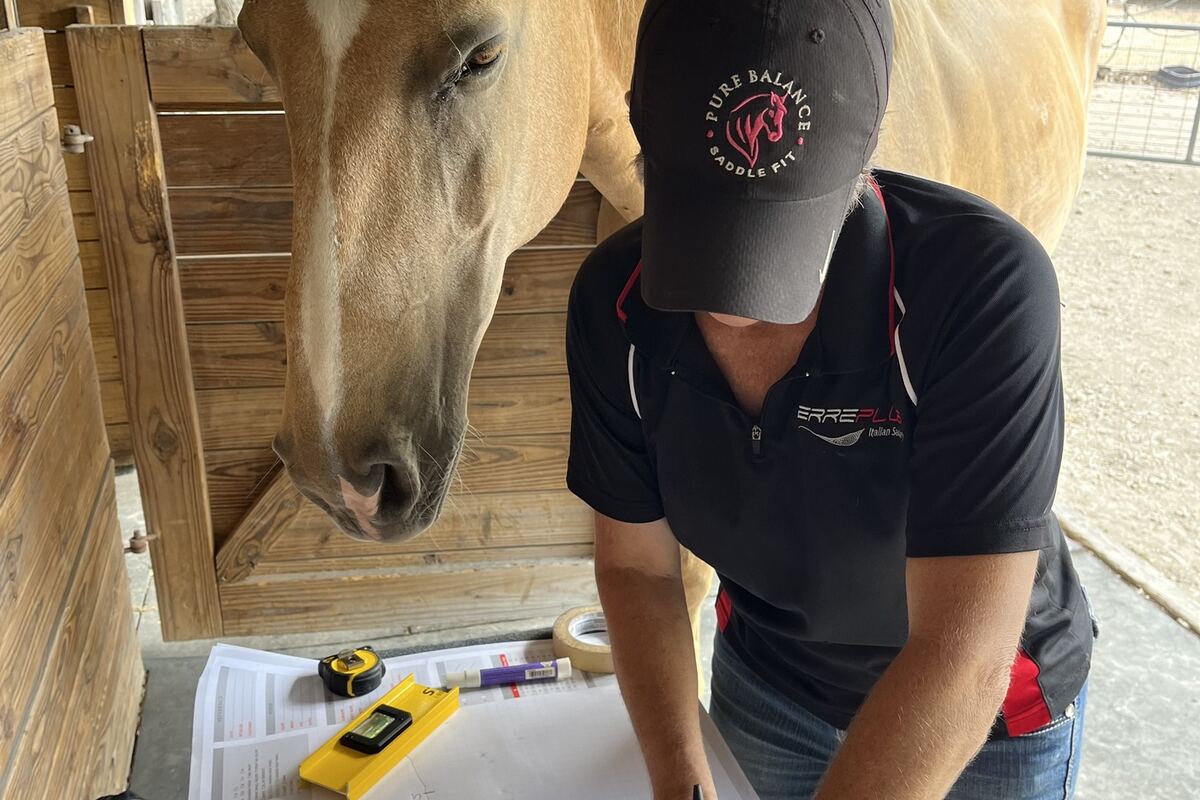
Susan McGinnis is an independent saddle fitter based in Kerrville, working with dressage and jumping riders across Texas. She comes to your barn, checks the saddle on your horse, and does most flocking adjustments right there. You don’t need to be buying a new saddle to book her. A lot of her work is bringing a saddle already in your tack room back to a good fit.
The first step is a free 15-minute call at (830) 510-3765. From there, you can book your spot with a $200 deposit that is credited in full toward your fitting. When several riders at one barn book together, the travel splits across everyone. See all of our saddle servicing and fitting work.
Not sure whether it’s the flocking or the saddle itself? Our list of signs a saddle doesn’t fit your horse is a good place to start.