Horses can’t tell us the saddle hurts. They show us, and the signs are often small enough to blame on something else: a mood, a fresh day, a training hole. If your horse pins its ears when the saddle goes on, or you feel like you’re fighting your own position every ride, the saddle is worth a look before anything else.
Here are the common signs, grouped by where they show up.
What your horse is telling you
When you tack up
- Pinning ears, swishing the tail, turning to bite or walking away when the saddle comes out.
- Flinching, dipping or tightening the back when the saddle goes on or the girth is done up.
- Sensitivity when you run your fingers firmly along either side of the spine where the panels sit.
Under saddle
- Reluctance to go forward, especially in the first ten minutes.
- Hollowing the back and raising the head instead of reaching into the contact.
- Short, choppy strides, trouble picking up one lead, or rushing downhill.
- Bucking, pigrooting or refusing fences that used to be easy.
After the ride
- Uneven sweat marks under the saddle, or dry patches surrounded by damp hair. A dry spot can mean too much pressure in that place.
- Ruffled or rubbed hair, swelling or heat.
- White hairs appearing in the saddle area. Those usually mark old pressure damage.
- Muscle wasting behind the shoulders, the hollows that sometimes show up on either side of the withers.
Any of these can come from somewhere else too: teeth, feet, soreness or training. Saddle fit is one of the places to check, and one of the easiest to change.
What the saddle is telling you
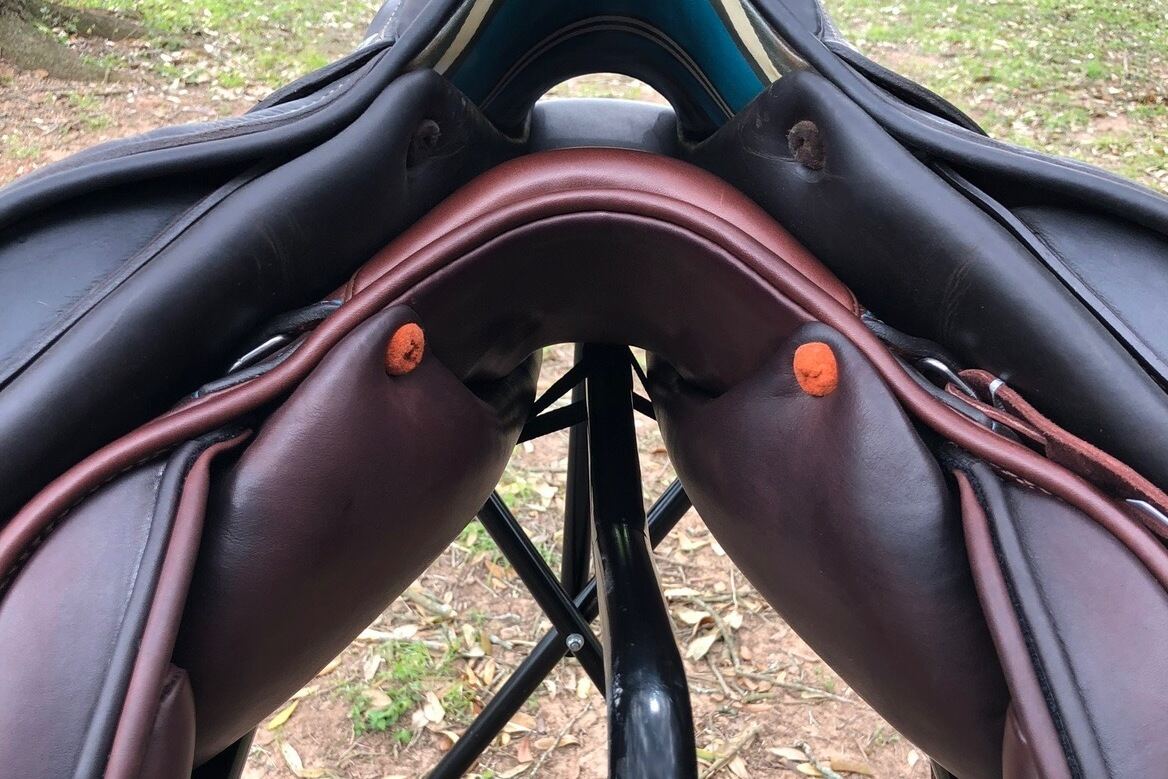
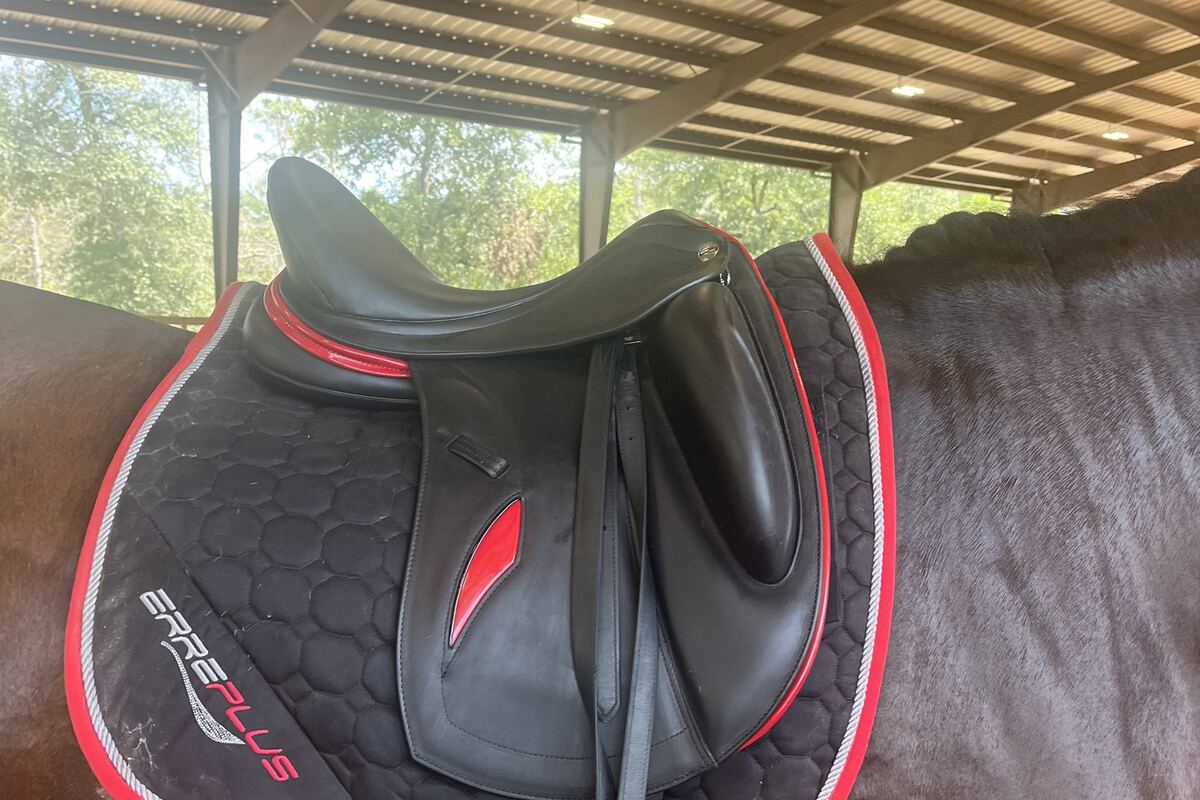
Put the saddle on without a pad, on level ground, and look:
- Wither clearance. There should be clear space between the pommel and the withers, and the gullet should not press on the spine anywhere along its length.
- Balance. The deepest part of the seat should sit roughly level, not tipped toward the pommel or the cantle.
- Bridging. If the panels touch at the front and back but not in the middle, the saddle is bridging and putting all your weight on two small areas.
- Rocking. Press down on the pommel and then the cantle. A saddle that seesaws doesn’t match the shape of the back.
- Slipping. A saddle that slides to one side during the ride, or creeps forward onto the shoulders, is not sitting where it was made to sit.
- Tree width. A tree that’s too narrow pinches at the front. Too wide and it sits down on the withers.
Uneven flocking causes a lot of these on its own. Our article on saddle flocking and how often it needs reflocking explains what to check there.
What you’re feeling in the saddle
A saddle has to fit the rider as well as the horse. A saddle that suits the horse but fights the rider isn’t a fit. Watch for:
- Feeling pushed behind the movement, or tipped forward onto your fork.
- Your leg swinging no matter how you try to keep it still.
- Being unable to sit centered, or ending up on one side of the saddle.
- A seat that’s too small or a flap that’s the wrong length for your leg.
Why fit changes even with a good saddle
A saddle that fit beautifully last year can stop fitting this year. Horses change with fitness, weight, age, time off and the seasons. A young horse coming into work can change shape quickly. That’s why a fitting is a starting point, not a one-and-done.
What a professional fitting checks
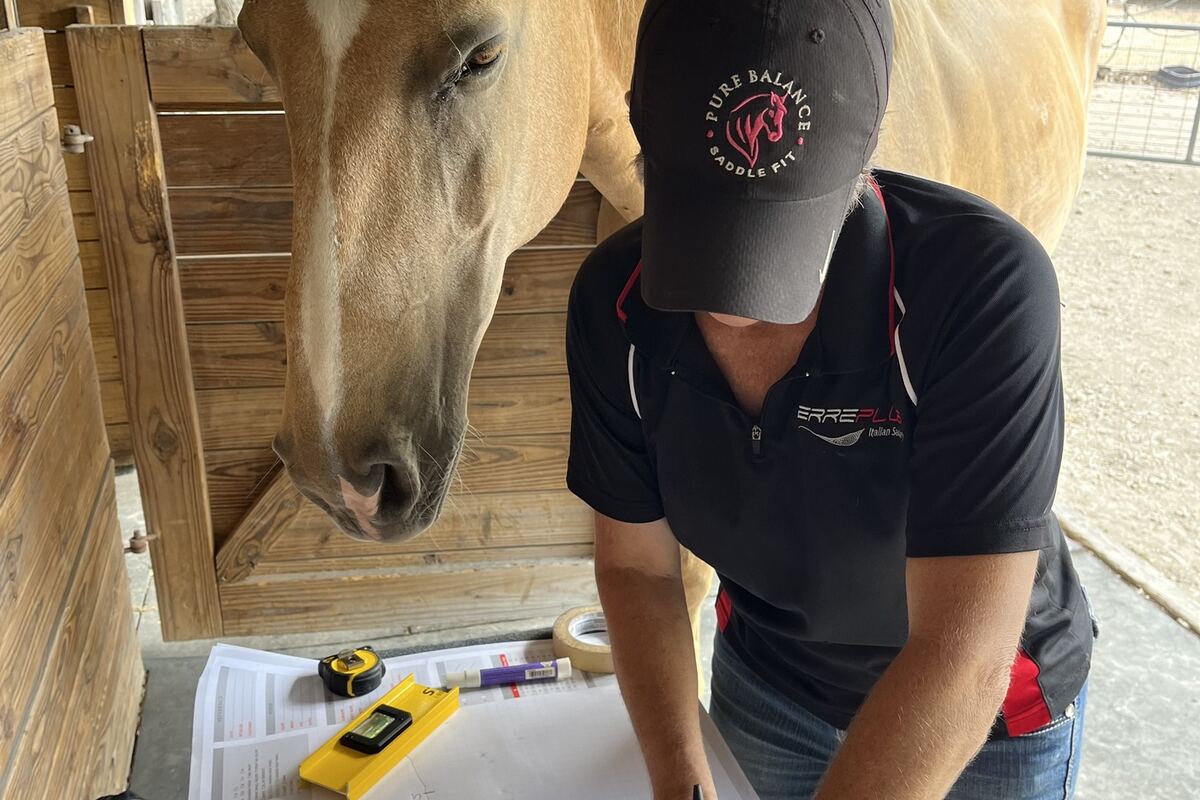
A proper fitting is a session, not a measurement. Here is how Susan works through it:
- The horse comes first. She reads your horse’s back, muscling and movement before she looks at a single saddle.
- Then the rider. Seat size, leg length, discipline and how you actually sit all shape the choice.
- Saddles on the horse. She brings out the models most likely to suit, and you ride in them. Bring your pad, girth and stirrups, and plan on a few hours so nothing gets rushed.
- Dialed in, then followed up. Once you’ve found the one, it gets flocked and adjusted to your horse.
You don’t have to buy a new saddle to book a fitting. Susan can also do a straight evaluation of the saddle you already own, tell you what’s working and what isn’t, and take back tracings for your records. If the saddle you have can be made to work, she’ll tell you so.
Where to start
Susan McGinnis is an independent English saddle fitter based in Kerrville, with more than 20 years of fitting experience. She works with dressage and jumping riders across the Texas Hill Country and beyond, and she isn’t tied to one brand, so the recommendation follows your horse.
Start with a free 15-minute call at (830) 510-3765. Tell her about your horse and your riding, and she’ll help you work out what you need. Read more about how a fitting works and what we service.
If your saddle has foam or air panels, our article on wool versus foam saddle panels explains how that changes the options.