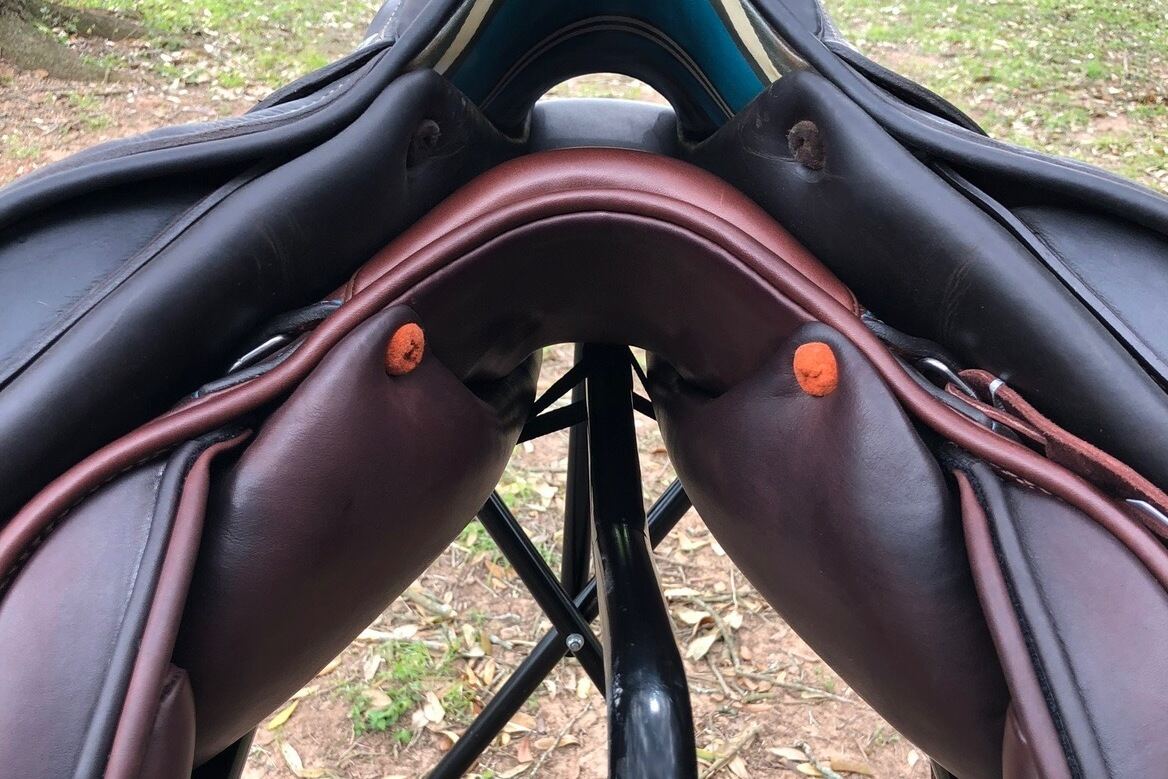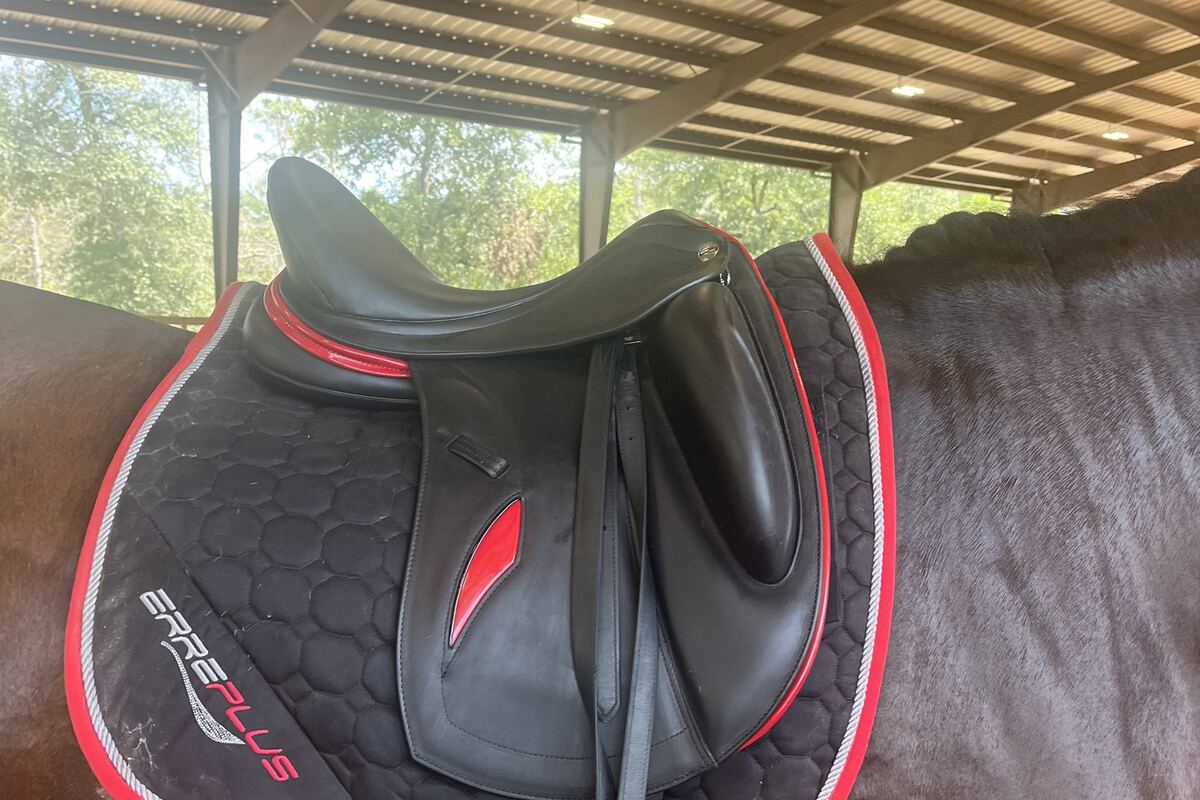
Two saddles can look almost identical from the top and be completely different underneath. The panels, the cushions that sit on your horse’s back, are filled with wool flocking, foam, or air. What’s inside them decides how the saddle can be adjusted, how it ages, and what happens when your horse changes shape.
None of the three is right for every horse. Here is how they compare.
Wool flocking
The traditional choice. The panels are stuffed with wool, and a fitter can add or remove it through the panel to change how the saddle sits.
What it does well: Wool can be adjusted, a little or a lot, for the life of the saddle. As your horse builds muscle, loses condition or simply ages, the flocking can follow. Wool also molds to the horse’s back as it beds down.
What it asks of you: Wool compresses with use and needs periodic checks and adjustments to stay even. Over years it can pack hard, and then the panels need a full re-flock. Our article on how often a saddle needs reflocking covers the schedule and the signs.
Foam panels
The panels are made from shaped foam, often with a leather or synthetic cover.
What it does well: Foam holds a consistent shape and gives a close, even feel. It doesn’t pack down the way wool does, so it needs less routine adjustment.
What it asks of you: The shape is largely set when the saddle is made. If your horse changes, foam can’t be added to or taken from one spot to follow the change the way wool can. When the fit drifts, the options are narrower: shimming with a pad, adjusting the tree if the saddle has an adjustable one, or converting the panels.
Air panels
The panels hold sealed air pockets instead of wool or foam.
What it does well: Air spreads pressure across the pocket as the horse moves.
What it asks of you: Like foam, an air panel can’t be fine-tuned spot by spot the way wool can, and the pockets themselves need to stay sound.
Side by side
| Wool flocking | Foam | Air | |
|---|---|---|---|
| Adjust to a changing horse | Yes, area by area | Limited | Limited |
| Routine maintenance | Regular checks and adjustments | Less | Less |
| Long-term upkeep | Full re-flock when wool packs hard | Panels can wear and compress | Pockets must stay sealed |
| Molds to the horse | Yes, as it beds down | Holds its made shape | Moves with pressure |
When a panel conversion makes sense
Some riders love a saddle’s tree, seat and balance but need panels that can follow their horse. For them, converting foam or air panels over to traditional wool flocking is an option. It’s one of the servicing jobs Susan does, for riders who want a panel they can adjust over the life of the saddle.
Whether a conversion is a good idea depends on the saddle and the horse. Susan looks at both first. If the saddle you already own can be made to work, she’ll tell you so.
The tree matters as much as the panels
Panels sit under the tree, and the tree sets the saddle’s basic width and shape. An adjustable tree can be widened or narrowed so the saddle keeps fitting as your horse changes through the seasons or comes back into work. On a fixed tree, the panels do more of the work. If you’re not sure what you have, Susan can tell you at an evaluation.
If you’re seeing any of the signs that a saddle doesn’t fit your horse, the panels are one of the first places to look.
Getting your panels looked at
Susan McGinnis is an independent English saddle fitter based in Kerrville, working with dressage and jumping riders across Texas. She is an authorized Erreplus dealer and also fits Bliss of London and Ikonic, but she isn’t tied to one brand, so the recommendation follows your horse.
Start with a free 15-minute call at (830) 510-3765. See everything we do on our services page, from on-site flocking to adjustable-tree fitting and panel conversions.